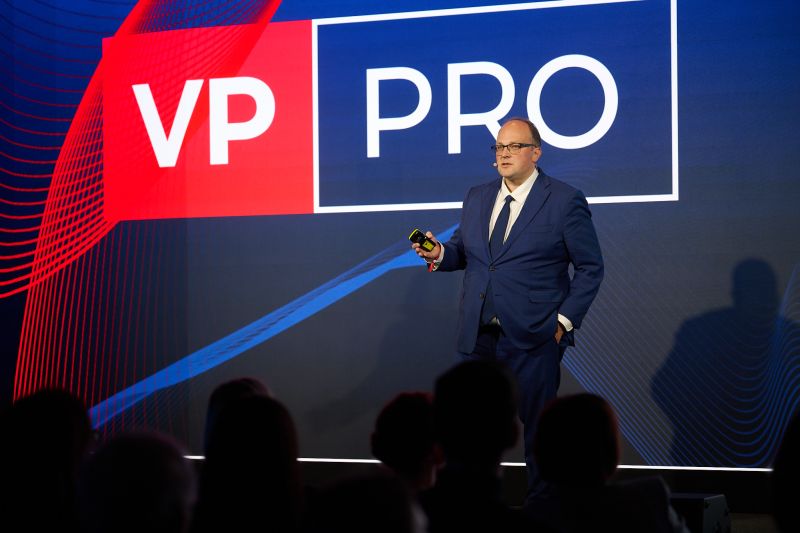
On 28 November, Vilnius hosted VP PRO Vilnius 2026 – the largest public procurement conference for professionals. As every year, the event brought together leading public procurement lawyers, experts, and practitioners who shared their insights on legislative developments, the latest case law, and emerging trends. Among the speakers was Karolis Smaliukas, Partner at TEGOS and Head of the Public Procurement Specialisation Group, who delivered a presentation titled “Expected Amendments – and Non-Amendments – to the Public Procurement Law.”
In his presentation, Karolis outlined the Government’s intention to review public procurement regulation with a focus on reducing administrative burdens and expanding the scope of strategic procurement by strengthening environmental, regional development, and social criteria. The Public Procurement Office has also submitted its own proposals for a comprehensive review of the system. Many of these ideas echo the findings of a recent European Commission study on the implementation and impact of the Public Procurement Directives, which is expected to guide the upcoming review of the EU framework.
However, as Karolis noted, despite the consistency of objectives set by successive governments, their implementation remains fragmented. In practice, the measures introduced often complicate procurement procedures or fail to substantially reduce the administrative burden. He emphasised the need to identify the specific stages of the procurement process where the most significant challenges arise and to determine which targeted changes could genuinely streamline the system.
For example, granting contracting authorities greater flexibility to adjust tender documents at early stages – without obliging them to re-publish the procurement –could save time, reduce costs, and increase procedural efficiency. While such flexibility may raise concerns in international procurements, its application in simplified or low-value procurements is not explicitly precluded. Similar issues arise in the context of clarifying bids and qualification documents.
Karolis concluded that the legislative amendments currently under preparation do not introduce meaningful improvements. On the contrary, some proposals risk increasing administrative complexity – for instance, the requirement to conduct a mandatory cost-benefit analysis for every international procurement.
- More about the conference HERE.