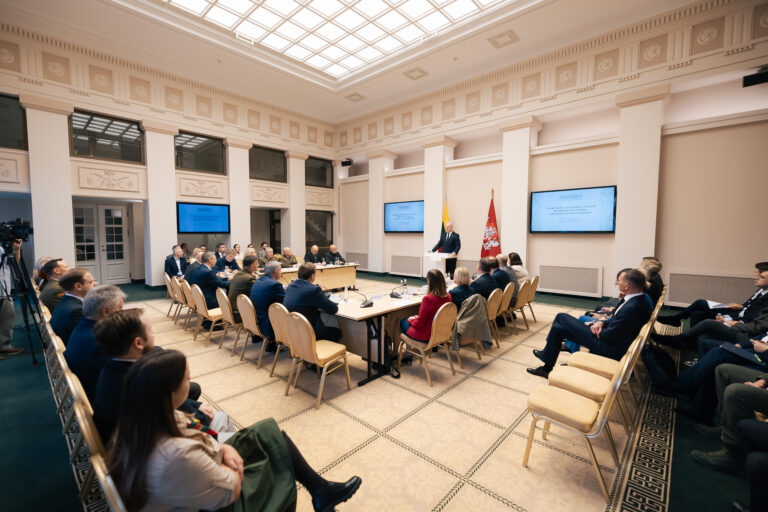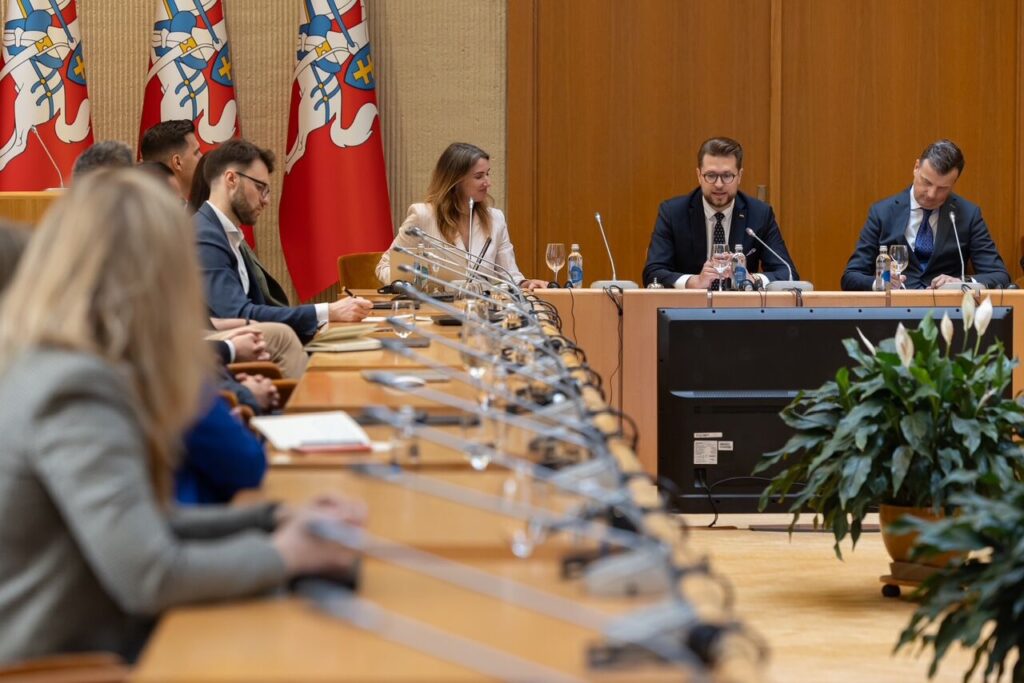
Six out of ten Lithuanians say it matters whether businesses act with civic responsibility. On May 27, during a parliamentary discussion titled “Civic Responsibility in Business”, data presented by Spinter Research revealed that this factor influences consumer choices when selecting products or services. However, only half of the respondents could name a specific business they consider civically responsible. The discussion, initiated by the law firm TGS Baltic, focused on public expectations and the role of business in society.
Civic Responsibility Most Visible in Times of Crisis
“We’re not just talking about values today – we’re talking about action. What can we do to see more civic responsibility in business?” said Minister of Economy and Innovation Lukas Savickas, who hosted the event. “We live in uncertain times, where business accountability and leadership are more important than ever. We saw this during the COVID-19 pandemic, and more recently, when businesses united to influence decisions on funding national defense. It’s clear – we’re increasingly talking not just about profit, but about social missions and how business addresses societal challenges. I hope today we’ll find bold, long-term solutions that make civic responsibility a natural part of everyday business practice.
The roundtable brought together representatives from business, NGOs, and government.
“Civic responsibility in business isn’t just about joining initiatives or paying taxes honestly,” emphasized Vilius Bernatonis, Managing Partner at TGS Baltic. “It’s a broader concept – a sense of ownership and responsibility for your country. When a business chooses to operate in Lithuania rather than elsewhere in the EU, it contributes to national growth. Our goal is to foster dialogue so that society and business see each other not as opponents, but as partners walking the same path. In the long run, it’s civically responsible businesses that help build a successful state.”
Survey Reveals Public Expectations for Business
A representative survey commissioned by TGS Baltic in April showed that people most often associate civic responsibility with responding to crises (especially support for Ukraine), social campaigns, and charitable giving. However, participants in the discussion stressed that civic responsibility is a much broader and more layered concept.
The survey found that the average rating of Lithuanian business civic responsibility is 6.0 out of 10 – neither positive nor negative. Men tend to rate businesses more favorably, especially in the context of crisis response. Meanwhile, people aged 56 and older are the least familiar with the concept and show the lowest understanding of what civic-minded business means. Although 62% of respondents said civic responsibility is important to them, they couldn’t name a single civically responsible company.
Residents of major cities are more likely to believe that businesses would step up during emergencies. Nearly half of respondents believe their civic initiatives at work would be supported, with younger generations expecting the most encouragement. Business leaders primarily associate civic responsibility with supporting the state during crises, fostering Lithuanian capital, and taking a clear public stance on important issues.
Participants agreed: for civic responsibility to become a norm in business, there must be more public dialogue, visibility of good examples, and mutual trust between business, government, and society. As noted during the event, civic responsibility is not about one-off campaigns or public gestures – it’s about long-term commitments and responsible daily actions that help build a better Lithuania for all.